
Wardrobe tag
- The Motion Picture Costumers, IATSE Local 705, say they have been making costumes a reality since 1937.
- The Costume Designers Guild says the studio system dissolved and the guild was organized in 1953 for designers who were freelance or under studio contract.
- Studio costume houses still store and rent out previously used costume pieces, Local 705 says.
In Hollywood’s studio era, costume was a department with its own staff. A film’s look came from a designer, often under contract to the studio, and from a large staff of costumers, cutters, tailors, dyers and milliners who turned drawings into clothes. Much of that structure still exists in Los Angeles today, in the unions that organized it and in the studio costume houses.
The designers
The Costume Designers Guild’s history names the designers who defined the period. Travis Banton created signature looks for Marlene Dietrich. Gilbert Adrian designed The Wizard of Oz in 1939 and, with Joan Crawford, the strong-shouldered silhouette of the 1940s. Walter Plunkett designed Gone with the Wind; Orry-Kelly, Casablanca; Edward Manson Stevenson, Citizen Kane and It’s a Wonderful Life; Bernard Newman, Top Hat. Other names in the guild’s gallery from the 1930s and 1940s include Howard Greer, Robert Kalloch and Irene Lentz.
Walter Plunkett’s own verdict on his most famous piece is quoted by the guild: the green dress in Gone with the Wind, he said, because it makes a story point, is probably the most famous costume in the history of motion pictures.
Under contract, then on their own
The guild records that as the Hollywood studio system dissolved, in 1953 nine film costume designers founded the Costume Designers Guild to respond to the industry’s changing needs. As an independent organization it negotiated separate contracts for members who were either freelance designers or designers under contract to a studio. In 1976 it joined the International Alliance of Theatrical Stage Employees as Local 892, which it remains. More in The Costume Designers Guild, Local 892: Who It Represents and How to Join.
The costumers
The people who build, fit and maintain costumes have their own union, older than the designers’ guild. The Motion Picture Costumers, IATSE Local 705, say they have been making costumes a reality since 1937 and describe themselves as the largest union of costume artisans and craftspeople in film and television. They research, pull, fit, pin, sew, shop and build costumes, and serve as the continuity guards who make sure every performer arrives on set dressed in character.
The crafts inside a costume department
Local 705’s list of classifications reads like a map of a studio-style wardrobe department:
| Role | What the job involves, per Local 705 |
|---|---|
| Costume Department Supervisor | Runs the department, hires costumers, breaks down scripts, gathers research, and shops for, buys or rents costumes |
| Key Costumer | Leads teams of costumers or a second unit to realize the designer’s vision |
| Pattern Maker and Fitter | Makes patterns, cuts fabric and fits women’s garments from designs or sketches |
| Tailor Cutter | Drafts men’s patterns, cuts materials and fits tailored suits; the old title ‘Gang Boss’ has fallen out of use |
| Dyer and Head Dyer | Dyes, tints, bleaches or strips fabric, and ages and distresses costumes |
| Milliner | Designs, makes and refurbishes hats and headpieces |
How those roles combine to make one garment is described in How a Film Costume Is Made: From Script Breakdown to the Last Fitting.
The studio costume house
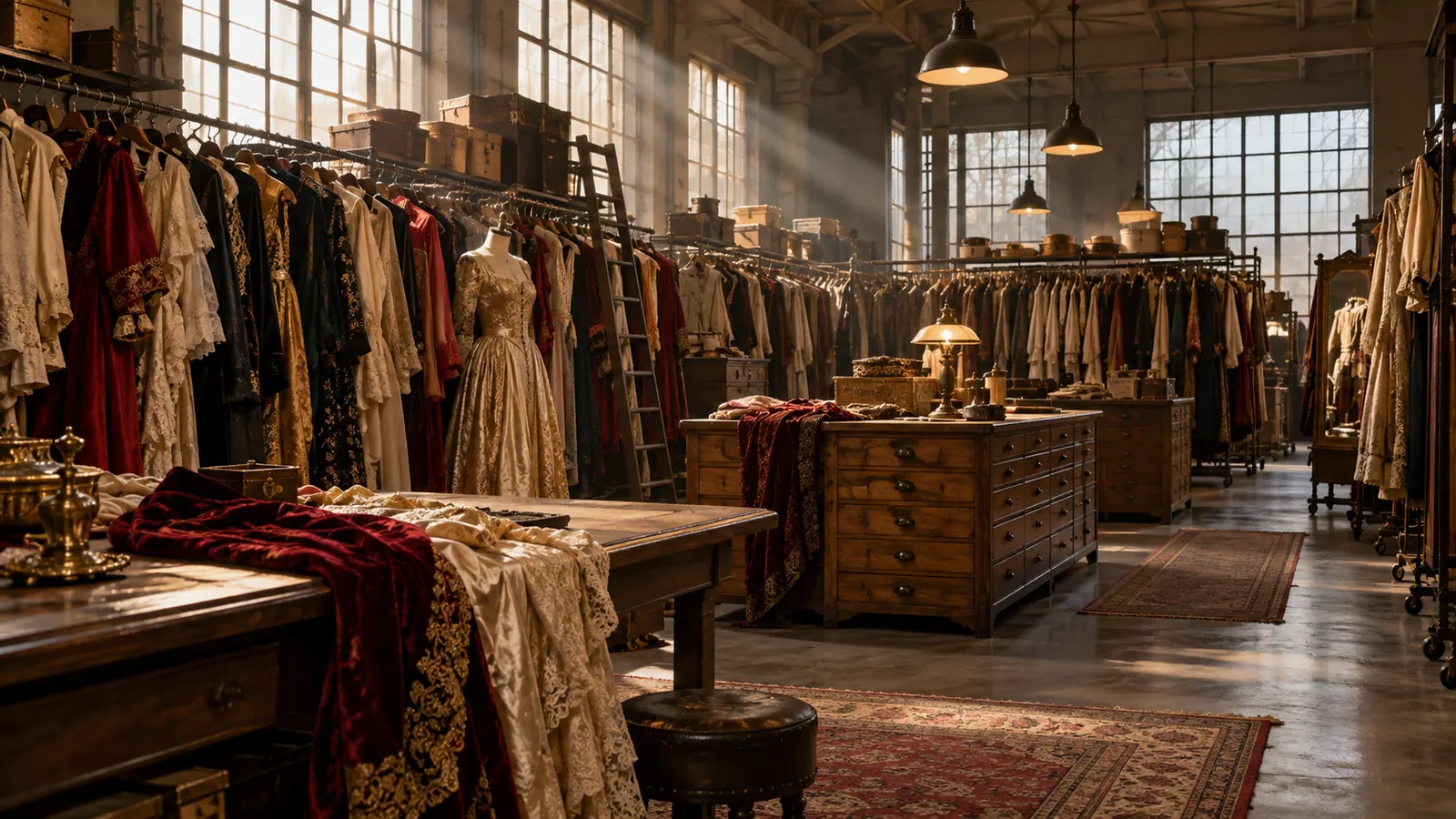
One part of the old system is still very visible. Local 705 says its Costume Department Forepersons oversee studio costume houses rather than work on productions, managing the stock specialists and costumers who run the rental operations. Those houses store and rent out previously used costume pieces so that good things don’t go to waste. Costumers on productions regularly pull costumes from rental houses as part of their work, and costumers at any level may also work in costume houses, helping to pull costumes and process orders. If you want to rent from one, see Renting Costumes in Los Angeles: Studio Costume Departments and Union Costume Houses.
Tip: Union costume houses are also an entry point to the industry: Local 705 says 30 days of work as a costumer at a signatory costume house can make you eligible to apply for membership. See Working in a Los Angeles Costume Department: Jobs, Rosters and the Paths Into Local 705.
Studio costume departments today
Four studio costume departments appear on Local 705’s list of union costume sources: ABC Signature in Glendale, Warner Bros. Studio Operations in Burbank, Fox in West Los Angeles and Universal in Universal City. The union says studio departments offer huge inventories, including large collections of period and contemporary costumes, and can supplement productions with their own tailoring, manufacturing and rentals, although the ABC Signature and Universal departments are listed with no tailor shop or manufacturing.
What the era left behind
The studio era also left costumes in collections. The ASU FIDM Museum lists film costumes among the objects it collects, and LACMA describes its Costume and Textiles department as internationally recognized as one of the premier collections of costume and textiles in the world. Our guide to Where to See Film Costumes in Los Angeles: Museums, Hours and What to Check First explains what to check before you visit, and A Short History of Hollywood Costume Design, Decade by Decade puts the studio years in the longer story.