
Wardrobe tag
- The FTC care labeling rule, 16 CFR Part 423, applies to manufacturers and importers, and its current form dates from 1983.
- Clothes moth larvae take on the color of the fibers they eat, which makes them hard to spot.
- Children’s upper outerwear in sizes 2T to 16 with drawstrings that do not meet ASTM F1816-97 is listed by the CPSC as a substantial product hazard.
A vintage garment can be the best costume you ever own, or an expensive bag of moth larvae. The difference is in the inspection. Museum conservators have a well-tested way of looking at old clothes, and it works just as well at a flea market stall or a vintage shop on a busy Los Angeles street. This guide borrows their checklist, plus a few federal rules that explain what labels can and cannot tell you.
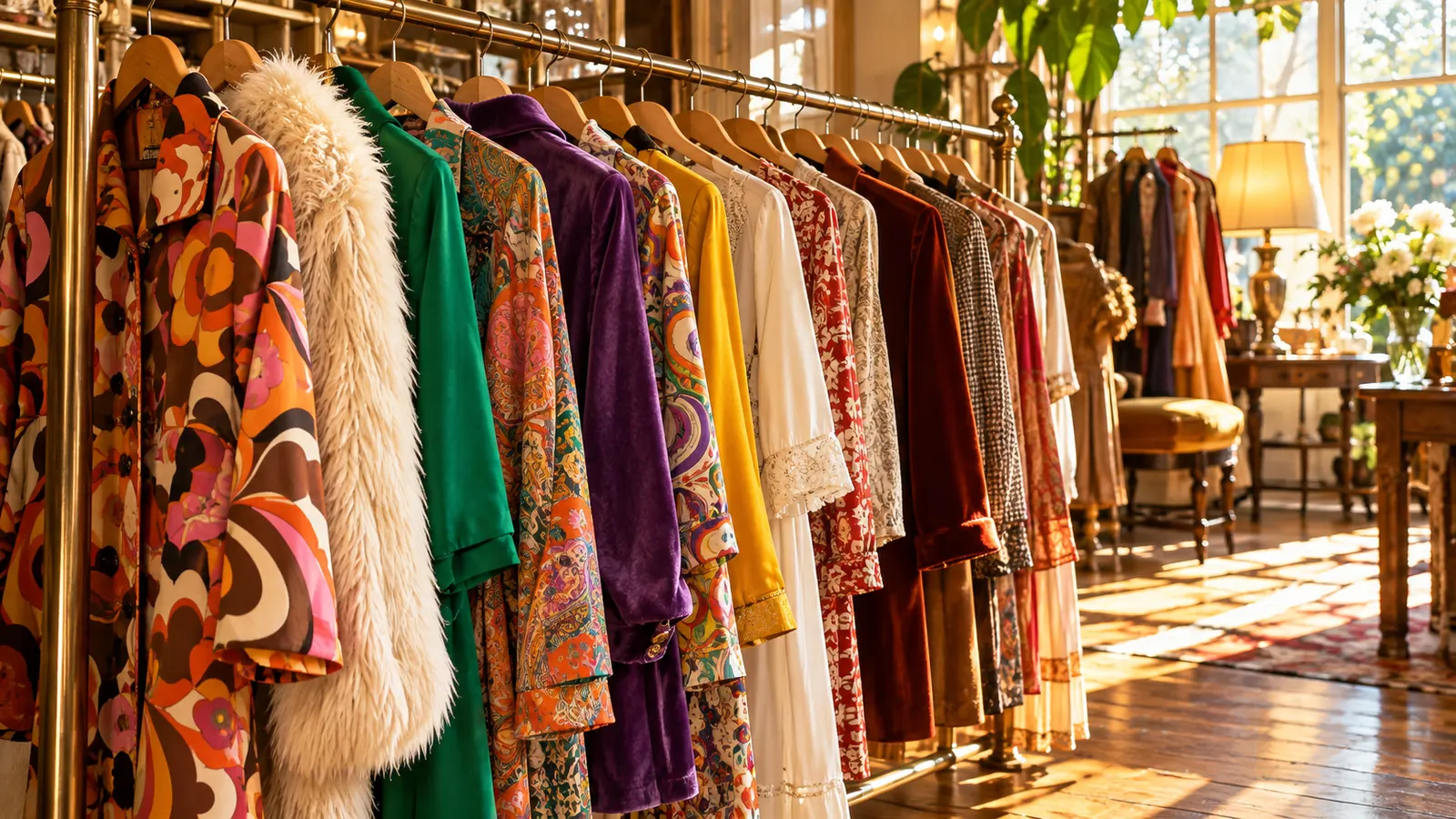
Start with the structure
The National Park Service Museum Handbook asks four questions before a costume is hung, and they are a good test of whether a garment can be worn at all:
- Are the shoulder seams strong and intact?
- Is the fabric around the shoulders and upper body free of splits, holes or other weakness?
- Can the waistline support itself without strain at the shoulders or waist?
- If not, could it be supported, for example with waist tapes?
Check each point before you pay, paying most attention where the weight of the garment hangs.
Fabrics that need extra caution
Two kinds of garment come up repeatedly in the handbook’s warnings. Bias-cut garments, such as some couture pieces and flapper dresses from the early 20th century, are among those it says are best stored flat, because hanging strains them. Weighted silks, treated with metallic salts in the 18th and 19th centuries to give a fuller drape, are weak when aged: the handbook says they fracture and powder very easily, are easily damaged by washing and dry cleaning, and are very sensitive to light, moisture and pollution.
Look for pests and mold
The handbook describes clothes moths as drawn to protein fibers: wool, silk, hair, fur and feathers. The female lays eggs in the weave, and the larvae feed on the fabric, either making holes or grazing on the surface and thinning the yarns. Because larvae take on the color of what they eat, they are hard to see. Carpet beetles also attack silk and wool. Mold and mildew, which grow in warm, damp places, leave irreversible brown stains.
| What to look for | What it may mean |
|---|---|
| Small holes, especially in wool or silk | Moth or carpet beetle feeding |
| Thin, grazed patches on the surface | Moth larvae grazing on the yarns |
| Brown stains that will not shift | Mold or mildew damage |
| Breaks along old fold lines | Fiber fatigue; textiles tend to break along folds over time |
Tip: Keep any new vintage purchase away from the rest of your wardrobe until you are sure it is pest-free. Museums isolate newly acquired objects for exactly this reason, and so should you.
Old hats, furs and feathers
Vintage millinery has a hidden hazard. The handbook warns that hats made of fur, feathers or parts of birds and animals may contain pesticide residues, including arsenic, and recommends testing bird and mammal skins prepared before the mid-1980s. Until you know, handle such items with gloves, avoid touching them with bare skin and wash your hands afterward. Think twice before wearing one.
What labels can and cannot tell you
Most modern clothing carries a permanent care label because of the Federal Trade Commission’s care labeling rule, 16 CFR Part 423. The rule in its current form dates from 1983. It requires manufacturers and importers to attach labels with regular care instructions, generally a washing or a dry cleaning instruction, and if a product cannot be cleaned by any method without harm, the label must say so. The rule covers manufacturers and importers, so a garment older than the rule, or one made at home or by a costume workroom, may have no care label at all.
The definitions in the rule are also useful for decoding labels you do find. Dry cleaning means a commercial process using a common organic solvent, and machine wash without a stated temperature means hot water up to 145 degrees Fahrenheit can be used regularly.
Buying for children
If you are buying vintage coats or jackets for a child, check the cords. Under the Consumer Product Safety Commission’s rule at 16 CFR Part 1120, children’s upper outerwear in sizes 2T to 16 with one or more drawstrings that do not conform to the voluntary standard ASTM F1816-97 is deemed a substantial product hazard. A drawstring, in the rule’s definition, is a non-retractable cord, ribbon or tape used to pull together parts of upper outerwear for closure.
After you buy
- Store it at 65 to 75 degrees Fahrenheit with humidity close to 50 percent, away from bright light; details are in Caring for Costumes and Vintage Garments: Storage, Light, Pests and Handling.
- Use a padded wooden hanger only if the garment passes the four structural questions; otherwise store it flat with acid-free tissue in the folds.
- Ask a textile conservator before cleaning anything fragile or valuable.
Renting as an alternative
For a one-night costume, or a period look you will not wear again, renting is the alternative. Los Angeles has studio costume departments and union costume houses with large period stocks; see Renting Costumes in Los Angeles: Studio Costume Departments and Union Costume Houses. And if you are buying for October, check the rules in Halloween in Los Angeles: West Hollywood Carnaval 2026 and the California Costume Rules to Know before you add a prop.