
Wardrobe tag
- The silent feature era ran from 1912 to 1929, the Library of Congress report on survival says.
- Only 14 percent of American silent features survive complete in their original 35mm form; about 7,600 titles left no film at all.
- In the mid-1920s, U.S. movie theaters averaged 46 million admissions a week from a population of 116 million.
Before sound, before the studio wardrobe departments of the 1930s, and long before an Academy Award for costume design, Hollywood had to work out who would dress the people on screen. The answer shaped a craft that Los Angeles still dominates. It also left a gap in the record, because most of the films that would show us those early costumes no longer exist.
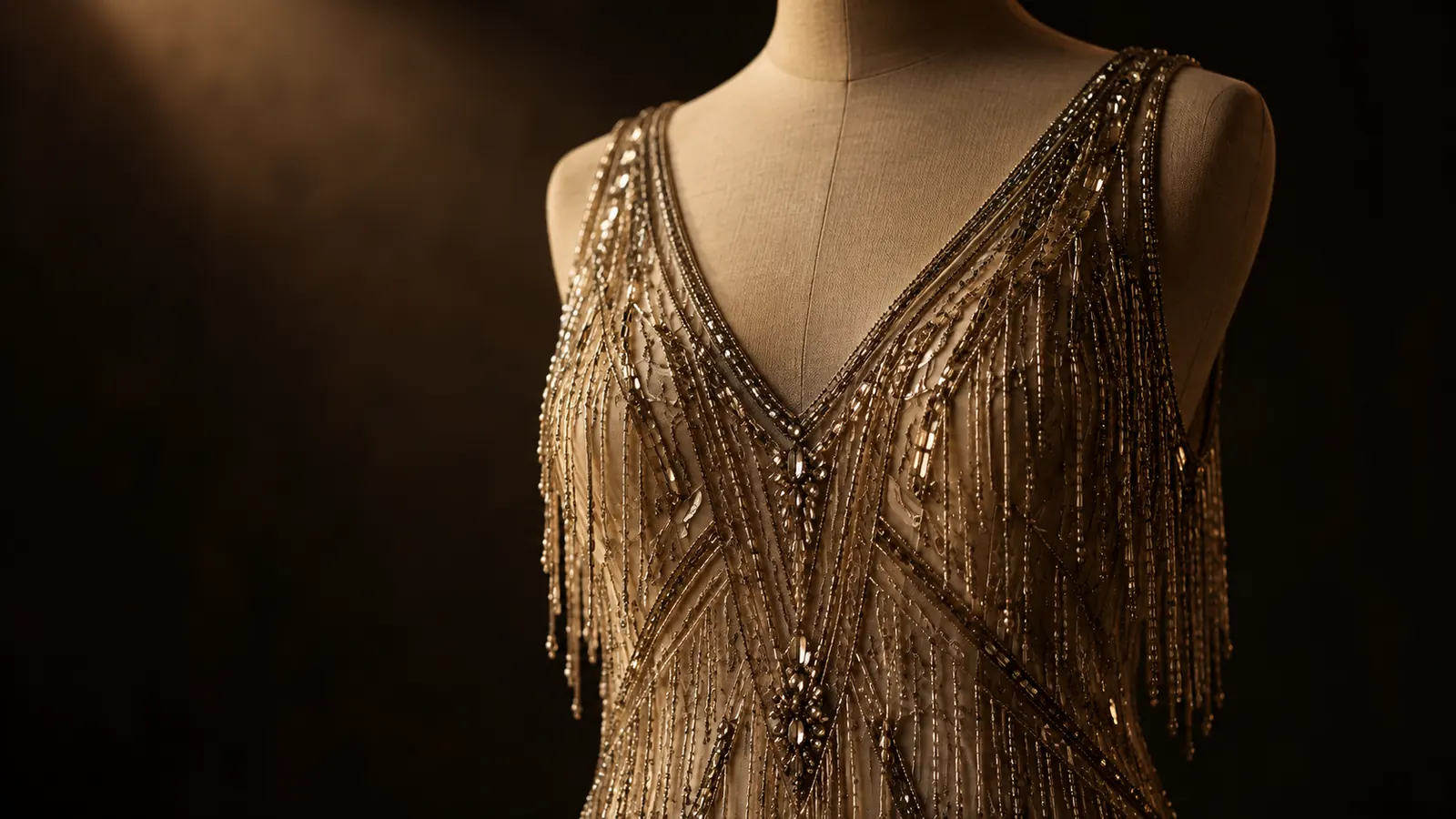
From dressing yourself to a new occupation
The Costume Designers Guild, the union of film and television costume designers, tells the story of its craft’s beginnings simply. In the first moving pictures, actors largely dressed themselves. As scripts quickly outgrew what performers could manage on their own, and as audiences grew, theaters multiplied and films became more complex, costume design for film became an occupation in its own right.
The guild credits designers such as Travis Banton with forging signature looks in black-and-white film for stars including Marlene Dietrich and Louise Brooks.
How big the silent audience was
It is easy to underestimate how central these films were. A 2013 report for the Library of Congress’s National Film Preservation Board, written by film historian David Pierce, notes that in the mid-1920s, movie theater attendance in the United States averaged 46 million admissions per week from a population of 116 million, which the report puts at five times the per capita attendance rate of today. Costumes on screen reached a vast public every week, long before television or the internet.
Screen clothes off the screen
Those audiences copied what they saw. The Library of Congress report says motion pictures influenced fashion and leisure and drove the emergence of modern celebrity culture. Its example is Colleen Moore, whose breakthrough came in Flaming Youth (1923), where she personified a new kind of woman, the flapper. In 1926 she was the top female star, receiving more than 10,000 fan letters a week. The report dates the earliest film in the flapper genre to The Flapper (1920), with Olive Thomas, and adds that surviving films are documentary evidence of what people wore, drove and used to furnish their homes.
Why so little survives
The same report is the most systematic count of what is left of American silent features, the era it dates from 1912 to 1929. Its findings are sobering:
| Status of American silent features, 1912-1929 | Titles | Share |
|---|---|---|
| Survive complete on 35mm as originally released | 1,575 of 10,919 | 14% |
| Survive in any form, including foreign versions, small-gauge copies and fragments | 3,311 | about 30% |
| No film material known to exist | 7,608 | about 70% |
The report lists the reasons for the loss as chemical decay, fire, lack of commercial value and the cost of storage. Sound films of the 1930s and 1940s mostly survived because they had commercial value for television in the 1950s, and new copies were made while the negatives were still intact. Silent films had no such value. The report says the major studios focused on current releases, with one exception: MGM ran a duplication program starting around 1960 that preserved every film still in its vaults, then donated the remaining nitrate masters to George Eastman House beginning in 1965. Other studios destroyed copies as they deteriorated.
Tip: When a silent film you want to study is lost, look for surviving foreign-release prints, small-gauge home-movie versions and still photographs. The Library of Congress report found that some features exist only in abridged 9.5mm versions or as paper prints deposited for copyright.
What that means for costume history
With roughly seven in ten silent features lost entirely, most of the era’s screen costume can no longer be seen in motion at all. The 14 percent that survive complete on 35mm are the closest record of how those costumes looked as audiences first saw them, which is why preservation of the remaining prints matters to anyone interested in the craft.
The coming of sound
The Costume Designers Guild marks 1927, the year sound arrived, as the start of the glamour of Hollywood’s golden age. The Library of Congress report notes that when the first Academy Awards were presented in 1929, silent film was already in decline; the Academy created a special award for The Jazz Singer, the first feature-length motion picture with synchronized dialogue sequences. The transition changed costume work, too: the studios built the in-house systems described in Inside Golden Age Studio Wardrobe Departments: Designers, Costumers and the Studio Costume House.
Where to look in Los Angeles
- The Academy Museum of Motion Pictures, at 6067 Wilshire Boulevard, is open six days a week and closed Tuesdays; check its current exhibitions before you go. See Where to See Film Costumes in Los Angeles: Museums, Hours and What to Check First.
- LACMA’s Costume and Textiles department holds more than 35,000 objects spanning over 2,000 years of dress, and shares its scholarship through the Doris Stein Research Center.
- For the broad sweep from silent film to streaming, start with A Short History of Hollywood Costume Design, Decade by Decade.