
Wardrobe tag
- Most paths into Local 705 start with an application to the Industry Experience Roster once you are close to 30 days of eligible work.
- A combination of union and non-union productions can qualify after 100 days within three years; professional theater after 200 days over three years.
- Every application needs three letters of recommendation from Local 705 members in good standing.
In Los Angeles film and television, costume work is organized largely through one union. The Motion Picture Costumers, IATSE Local 705, describe themselves as the largest union of costume artisans and craftspeople in film and television, and their website spells out the many ways to join. If you want to work in a costume department here, this is the map.
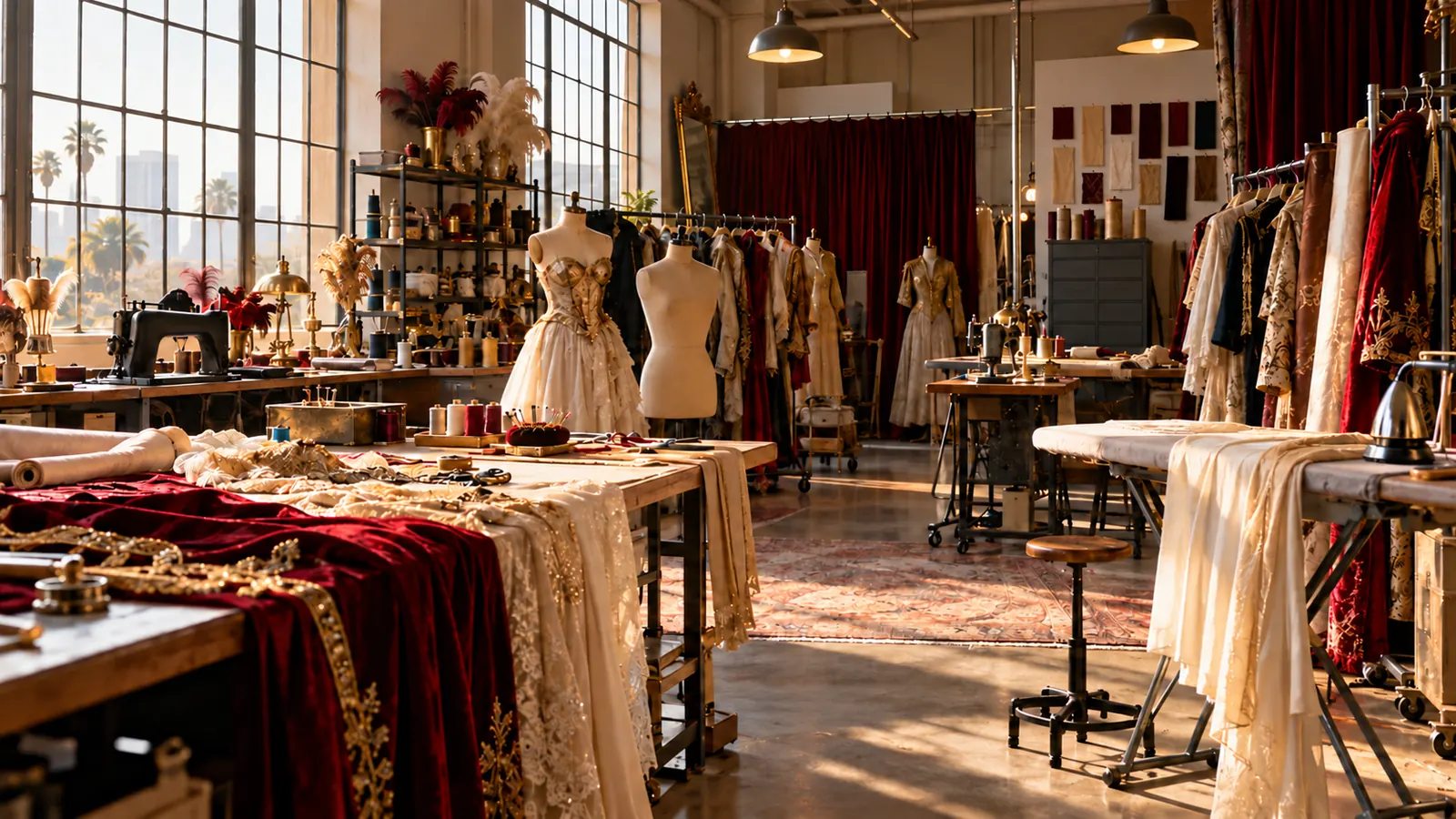
Two families of jobs
Local 705 divides its members into two broad groups. Finished costumers work with completed costumes: their main job, the union says, is to acquire, organize, monitor and maintain the costumes worn by principal actors and background artists. They pull costumes from rental houses, shop for fabrics and garments and run the department, and they are known for last-minute creativity. Custom made costumers manufacture and alter costumes: pattern makers, tailors, cutters, stitchers, dyers, finishers and specialty makers.
Within those groups are many titles, from costume supervisor and key costumer to figure maker and milliner. The path a garment takes through them is described in How a Film Costume Is Made: From Script Breakdown to the Last Fitting. Designers are a separate union, the Costume Designers Guild, covered in The Costume Designers Guild, Local 892: Who It Represents and How to Join.
Other corners of the work
- Commercial costumers handle every aspect of costuming television commercials, which Local 705 notes can be made in a few weeks or even days.
- Live television costumers work on soap operas, talk shows and game shows, setting looks on stars and guests and handling quick changes.
- Costume house employees work in independent signatory costume houses, which rent and manufacture costumes and sell supplies. Many are experts in particular periods, uniforms or genres.
The roster comes first
Most paths into Local 705 start with the Industry Experience Roster, the list that rostered productions hire from; without it, the union says, a costume house worker’s options are limited to independent costume houses and non-roster productions. The union says you apply when you are close to, or have completed, 30 days of work under an eligible path. Roster placement is handled by Contract Services, the Contract Services Administration Trust Fund, which must approve your days before the union mails you an application. Applications, the union stresses, are not given out on request.
The paths to membership
| Path | Work needed, per Local 705 |
|---|---|
| Signatory costume house | 30 days as a costumer at a union costume house |
| Low- or mid-budget streaming, or music video | 30 days, within 365 days for custom made or 730 days for finished costumers |
| Commercials | 30 days within 365 days for the commercial roster; another 30 union commercial days for the Industry Experience Roster |
| Union and non-union mix | 100 days within 3 years on qualifying motion picture productions |
| Non-union show that flips union | 30 days with a production or company that becomes a union signatory |
| Live television | 30 days under a live TV contract to apply; 100 days over three years for the roster |
| Professional theater | 200 days over 3 years at a major theater or opera house |
The union gives the Ahmanson Theatre, the Mark Taper Forum and the Dorothy Chandler Pavilion as examples of professional theater. For the 100-day and theater paths, the employment verification must be submitted within one year of your last qualifying day.
When a show flips
One path depends on organizing. If you work on a non-union production that becomes union, Local 705 says retroactive pay and benefits are included for all the days you worked in most cases, so even a few days left on the show can count back to your first day. The union asks people working on non-union productions to contact it so organizing can begin.
Permits and training programs
Permits, also called waivers or vouchers, let you work on a rostered production without being on the roster when demand is high and no union costumers are available. The union says they are common under the commercial contract but much more restrictive in film and television, and are granted per person for one production. Thirty days worked on permit qualifies you for roster placement and membership.
Approved training programs are another route. Local 705 names Hollywood CPR as one with a successful model: completing it places graduates on the roster and makes them eligible to join, and a training program may let you qualify without having worked under the contract, avoiding permit fees. The union also points to diversity, equity and inclusion initiatives agreed in the 2021 Hollywood Basic Agreement negotiations, and suggests signing up with Crewvie or Array Crew.
What an application needs
- Three letters of recommendation from Local 705 members in good standing.
- An employment verification letter from the payroll company that processed the production’s payroll, for most paths.
- The application fee, half of the initiation fee and any permit fees from earlier quarters; the rest of the initiation fee before you are sworn in.
Tip: Qualifying days at a costume house are good for only one year for roster purposes, the union warns, so if you stop working there you may lose eligibility. Keep your own record of dates, days and job classification from the start.
Where costume houses fit
Because a signatory costume house is one of the most direct ways in, it helps to know who they are. Local 705 publishes a list of union costume houses in Los Angeles, from studio costume departments to independent rental houses and workrooms; it is summarized in Renting Costumes in Los Angeles: Studio Costume Departments and Union Costume Houses.
Local 705’s office is at 5127 Laurel Canyon Boulevard in Valley Village, and its website includes a membership FAQ for questions the paths above do not answer.